Proxy vs VPN: What is the Difference and Which is Better?
If you're trying to bypass a geo-block to watch Netflix, access a website restricted by your employer, or just want to hide your IP address from invasive trackers, you've likely come across two terms: Proxy and VPN. Because they are both used to route internet traffic through a remote server and hide your original IP address, many people use the terms interchangeably. However, from a technical and security standpoint, they are drastically different tools built for entirely different purposes.
The Key Takeaway
- Proxies change your IP address for a specific application (like your browser) but do not encrypt your data.
- VPNs change your IP address for your entire device and encrypt 100% of your internet traffic.
What is a Proxy Server?
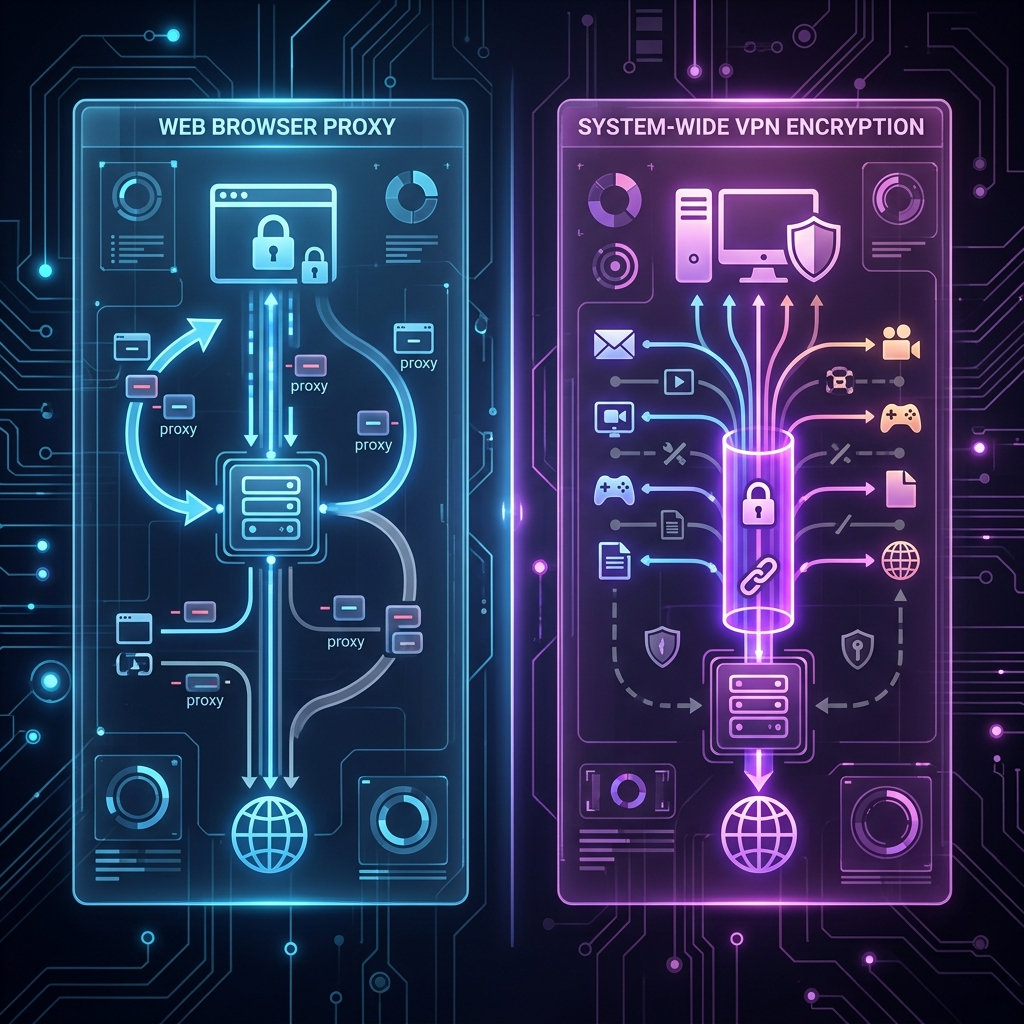
A proxy acts as a middleman between your device and the internet. When you configure your browser to use a proxy, your traffic flows to the proxy server first, which then requests the webpage on your behalf. The website only sees the IP address of the proxy server, not your real Public IP address.
The Three Main Types of Proxies
- HTTP Proxies: Designed specifically for web browsing. They only handle HTTP/HTTPS traffic. If you use an HTTP proxy in your Chrome browser, your torrent client or online game will still use your real IP address.
- SOCKS5 Proxies: These proxies don't care what kind of data is passing through them. You can configure them for web traffic, P2P file sharing, or gaming. However, like HTTP proxies, they still only operate on an application-by-application basis.
- Transparent Proxies: You might be using one of these without knowing it. They are often set up by employers, schools, or public Wi-Fi providers to monitor user traffic, block specific websites, or cache data to save bandwidth. They do not hide your IP.
What is a Virtual Private Network (VPN)?
A VPN also routes your traffic through a remote server to hide your IP, but it operates at the Operating System level rather than the application level. This means when you connect to a VPN, every single piece of data leaving your computer—whether from a web browser, a background update, a game, or a music streaming app—is routed through the VPN server.
More importantly, a VPN creates an encrypted tunnel between your device and the server. This military-grade encryption (usually AES-256) scrambles your data. Even if your Internet Service Provider (ISP), an employer, or a hacker intercepts the data, they will only see unreadable gibberish.
Direct Comparison: VPN vs Proxy
| Feature | Proxy Server | VPN |
|---|---|---|
| Traffic Scope | Application specific (e.g., Browser only) | Whole device (All apps & background data) |
| Encryption | None (ISP can see what you do) | Strong AES-256 Encryption |
| Connection Speed | Very fast (No encryption overhead) | Slightly slower (Due to encryption) |
| Reliability | Free proxies drop connection frequently | Highly stable connections |
| Cost | Usually Free | Usually Paid ($3-$12/month) |
Which Tool Should You Use?
You are at a local coffee shop using their free public Wi-Fi. You need to log into your bank account to transfer money. Which tool should you use?
When Should You Use a Proxy?
While VPNs are superior for security, Proxies still have legitimate use cases:
- Bypassing basic firewalls: If your school or office blocks YouTube, you can type the proxy IP into your browser settings and bypass the restriction quickly without installing software.
- Web Scraping: Businesses that scrape massive amounts of public data from competitors often use rotating proxy networks to prevent their origin IP from being banned.
- Low-stakes Geo-Unblocking: If you just want to read a news article restricted to European users and you don't care about encryption, a free web proxy will do the trick in 10 seconds.
When Should You Use a VPN?
For almost everything else, a VPN is the better choice.
- Protecting against ISP tracking: Your ISP cannot see what you are doing inside a VPN tunnel.
- Using Public Wi-Fi: The encryption prevents "man-in-the-middle" attacks at airports, hotels, and cafes.
- Torrenting: P2P networks publicly expose the IP address of everyone sharing a file. A VPN protects your real IP, whereas a proxy might leak it due to poor application integration.
Frequently Asked Questions
Can I use a Proxy and a VPN at the same time?
Yes, it's technologically possible, but highly discouraged. Running both simultaneously will significantly degrade your internet speed, and the proxy might actually compromise the security tunnel built by the VPN. Choose one or the other based on your needs.
Are free Proxies safe to use?
It is extremely risky. Many free proxy servers are run by malicious actors who use them to inject ads into the web pages you visit, or worse, monitor unencrypted traffic to steal passwords and cookies.
Is Tor a Proxy or a VPN?
The Tor browser operates similarly to a proxy, but instead of routing traffic through one server, it encrypts the data and routes it through at least three volunteer proxy servers (nodes) before reaching the destination. It provides maximum anonymity but is much slower than a standard VPN.
Related Articles